
When selecting a natural stone countertop, most homeowners focus on color, veining, and finish. While those elements define the overall look, the edge profile is the finishing detail that can dramatically influence a space’s style and functionality. From timeless eased edges to dramatic ogee designs, the right countertop edge helps complete the aesthetic while enhancing everyday usability.
Whether you’re designing a classic kitchen, a modern bathroom, or a statement-making island, understanding the pros and cons of different edge profiles can help you make the best choice for your project.
Why Countertop Edges Matter
A countertop edge is much more than a decorative detail. The profile you choose affects:
- The overall design style
- Safety and comfort
- Maintenance requirements
- Durability over time
- Fabrication costs
With natural stone materials like marble, quartzite, granite, and soapstone, selecting the right edge profile can highlight the beauty of the stone while creating a customized look that complements your design vision.
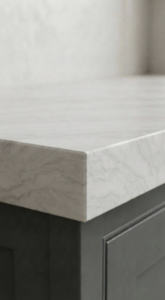 Eased Edge: Clean, Simple, and Timeless
One of the most popular choices in contemporary design, the eased edge features slightly softened corners while maintaining a crisp, straight appearance.
Pros
• Works with virtually any design style
• Easy to clean and maintain
• Less prone to chipping than sharp square edges
• Cost-effective option
Cons
• Minimal decorative detail
• May feel too simple for traditional or highly ornate spaces
Best For
Modern kitchens, transitional interiors, and projects where the natural stone itself is the focal point.
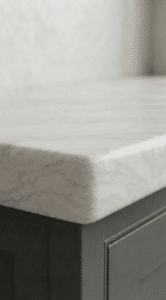 Pencil Edge: Soft and Family-Friendly
A pencil edge features gently rounded corners that create a softer look than an eased edge while maintaining a streamlined appearance.
Pros
• Comfortable to lean against
• Reduces the appearance of minor chips
• Clean, understated aesthetic
Cons
• Less architectural than square profiles
• May not create the dramatic visual impact some homeowners seek
Best For
Family kitchens, bathrooms, and casual living spaces.

Beveled Edge: Subtle Architectural Detail
A beveled edge incorporates an angled cut along the top edge of the countertop, adding dimension and sophistication.
Pros
• Creates interesting light reflection
• Adds visual detail without being overly ornate
• Works well in traditional and transitional settings
Cons
• Angles may collect dust or debris
• Can feel dated if not paired with the right design style
Best For
Traditional kitchens, luxury bathrooms, and classic home designs.
Similar Options Bevel edges can come in 1/4 and 1/2 bevels. The 1/4 bevel is pictured, and the 1/2 bevel has a more dramatic angle.
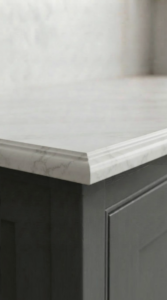 Ogee Edge: A Traditional Luxury Favorite
The ogee edge features an elegant S-shaped curve that has long been associated with high-end custom homes.
Pros
• Rich, decorative appearance
• Highlights the craftsmanship of natural stone
• Adds a sense of luxury and formality
Cons
• More expensive to fabricate
• Requires additional cleaning due to intricate curves
• Can feel too traditional in modern spaces
Best For
Formal kitchens, statement islands, and classic architectural styles.
Similar Options New trends feature Ogee style edges such as the Cove Ogee and Ogee on Ogee edge.
 Mitered Edge: The Look of Thick Stone
A mitered edge joins two pieces of stone at a 45-degree angle to create the appearance of a dramatically thicker slab.
Pros
• Delivers a bold, contemporary look
• Showcases large-scale veining beautifully
• Creates a luxurious, monolithic appearance
Cons
• More complex fabrication process
• Higher investment
• Can be susceptible to seam visibility if not expertly crafted
Best For
Modern luxury kitchens, waterfall islands, and statement applications.
 Knife Edge: Minimalist Elegance
The knife edge tapers toward the bottom, creating the illusion of an ultra-thin countertop while maintaining structural integrity.
Pros
• Sleek and modern appearance
• Creates a sophisticated architectural look
• Works beautifully with contemporary materials
Cons
• Less forgiving of impacts
• May not suit traditional designs
Best For
Modern kitchens, luxury condominiums, and minimalist interiors.
 Half Bullnose Edge: Classic Softness with a Contemporary Feel
A half bullnose edge features a rounded top edge and a flat underside, creating a softer profile than an eased edge while maintaining a clean, streamlined look.
Pros
• Softens the appearance of the countertop without looking overly traditional
• More resistant to chipping than sharp square edges
• Helps direct spills away from cabinetry and drawer fronts
• Comfortable edge for everyday use
• Versatile design that works in both traditional and transitional spaces
Cons
• Less crisp and modern than eased or mitered profiles
• Can make thinner countertops appear less substantial
• May not provide the dramatic visual impact of more decorative edges like ogee or fluted profiles
Best For
Transitional kitchens, family-friendly spaces, bathrooms, and homeowners seeking a balance between modern simplicity and classic softness.
 Bullnose Edge: Soft, Safe, and Timeless
A bullnose edge features a fully rounded profile, with the top and bottom edges curved into a smooth semicircle. This classic edge softens the appearance of natural stone while offering practical benefits for everyday use.
Pros
• No sharp corners, making it a family-friendly option
• Highly resistant to chipping along the edge
• Smooth, comfortable surface to lean against
• Timeless style that works well in traditional and transitional spaces
Cons
• Less contemporary than eased, mitered, or knife-edge profiles
• Can make countertops appear thinner and less architectural
• Rounded profile may downplay dramatic veining and slab thickness
Best For
Traditional kitchens, family homes, bathrooms, and spaces where safety, durability, and a softer aesthetic are priorities.
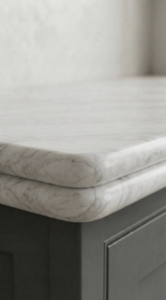
Double Bullnose Edge: Classic Elegance with Added Softness
A double bullnose edge features a rounded profile on both the top and bottom edges of the countertop, creating a smooth, symmetrical appearance.
Pros
• Softens the look of thicker countertops
• Comfortable edge profile with no sharp corners
• Timeless and elegant aesthetic
• Helps showcase the depth of natural stone
Cons
• More traditional than contemporary
• Additional fabrication increases cost
• Rounded form may not align with minimalist designs
Best For
Traditional kitchens, luxury bathrooms, and spaces that favor classic detailing.
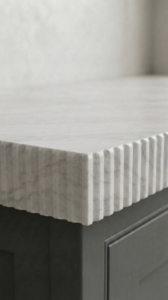 Fluted Edge: The Luxury Trend Designers Are Loving
One of the newest trends in custom stone fabrication, fluted edges incorporate vertical grooves or carved channels into the countertop edge. Inspired by classical architecture yet reimagined for contemporary interiors, fluting adds texture, shadow, and movement to natural stone surfaces.
Pros
• Creates a highly customized, furniture-like appearance
• Adds visual texture and depth
• Elevates kitchens and vanities with a bespoke aesthetic
• Pairs beautifully with modern luxury and organic contemporary designs
Cons
• Premium fabrication and installation costs
• Requires highly skilled stone craftsmen
• Grooves can collect dust and debris over time
Best For
Luxury kitchen islands, statement vanities, hospitality projects, and contemporary homes seeking a distinctive, designer-driven look.
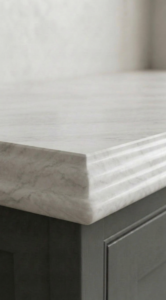 Dupont Edge: Elegant and Traditional
The Dupont edge features a straight drop with a graceful curved transition, creating a layered and refined profile often found in luxury kitchens and bathrooms.
Pros
• Sophisticated, high-end appearance
• Adds visual depth and dimension to the countertop
• Complements traditional, transitional, and classic luxury designs
• Showcases the craftsmanship of natural stone fabrication
Cons
• Higher fabrication cost than simpler edge profiles
• More detailed profile can require additional cleaning
• May feel too ornate for modern or minimalist spaces
Best For
Luxury kitchens, formal bathrooms, traditional homes, and projects seeking a timeless, custom-crafted look.
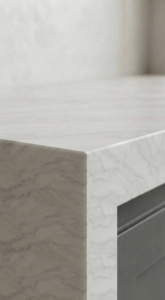 Waterfall Edge: A Dramatic Design Statement
Technically an installation style rather than a traditional edge profile, a waterfall countertop extends vertically down the sides of an island.
Pros
• Creates a seamless, sculptural appearance
• Highlights the movement and veining of natural stone
• Protects cabinet ends from wear
Cons
• Requires additional material
• Higher fabrication and installation costs
Best For
Contemporary homes and open-concept spaces where the island serves as a focal point.
Designer Trend Watch
While eased edges remain the most popular choice for their versatility, fluted, mitered, and waterfall details are among the fastest-growing trends in luxury natural stone applications. Newest trends feature Ogee style edges with Cove and Ogee on Ogee edges. These profiles transform countertops from simple work surfaces into architectural focal points, allowing homeowners and designers to showcase the beauty and craftsmanship of natural stone in new ways.
Which Edge Profile Is Right for Your Project?
The ideal countertop edge depends on your design goals, lifestyle, and selected stone. For homeowners seeking timeless versatility, eased and pencil edges remain enduring favorites. Those pursuing a more luxurious aesthetic often gravitate toward ogee or fluted profiles, while modern designs increasingly feature mitered edges, knife edges, and waterfall installations that create bold architectural impact.
Natural stone offers nearly limitless design possibilities, and the edge profile is one of the most effective ways to personalize your countertops. Whether you prefer understated simplicity or dramatic sophistication, selecting the right edge is the finishing touch that transforms a beautiful slab into a truly custom piece.
Final Thought
At Stratus Surfaces, we believe every detail matters. From selecting the perfect natural stone slab to choosing the ideal edge profile, thoughtful design decisions ensure your natural stone surfaces are both beautiful and functional for years to come.